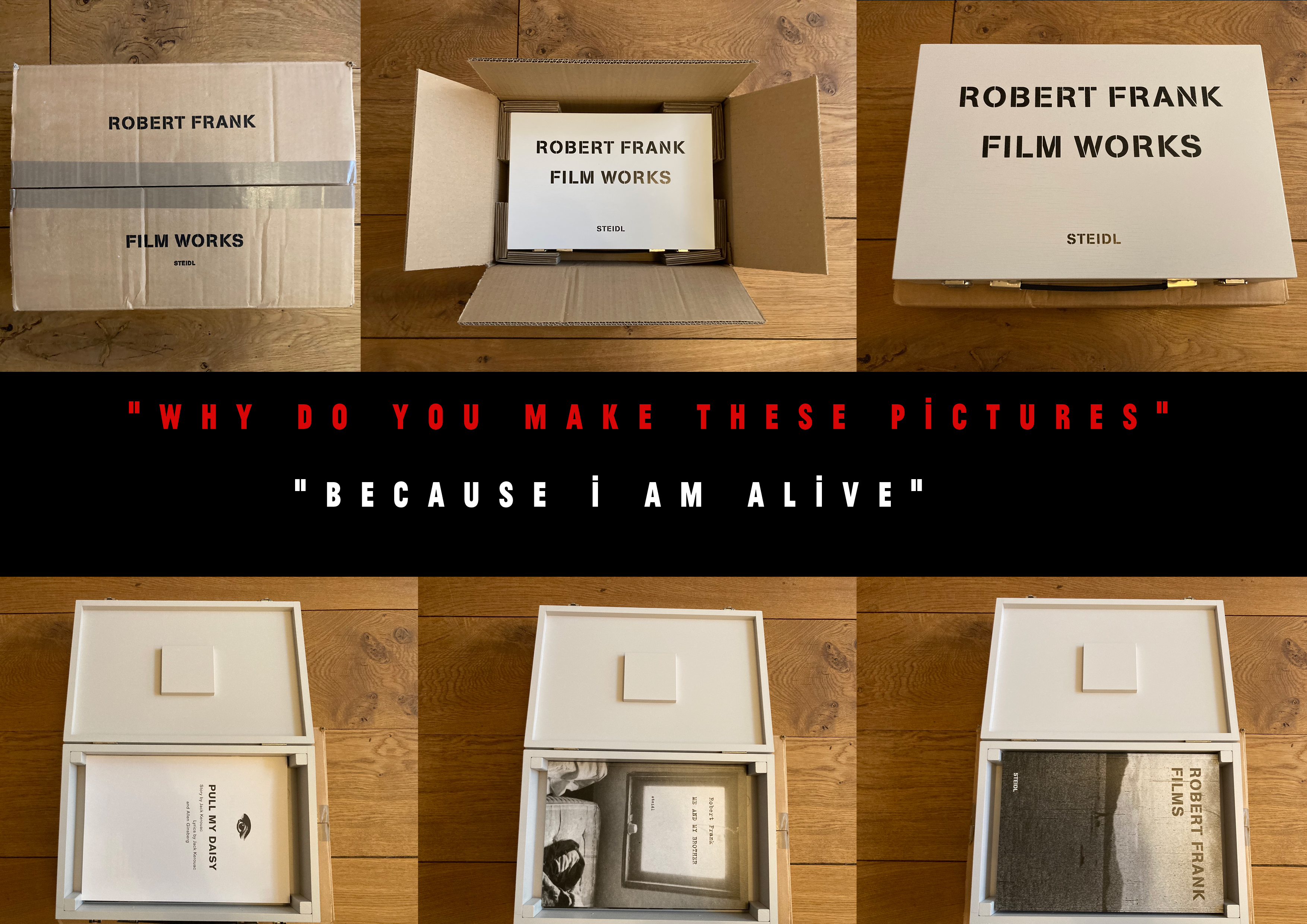
In one of my previous posts I was dedicating a song to Robert Frank, celebrating a human being who taught me the art of acceptance, how to accept, well that is something great if you are able to accept the sometimes unacceptable through your art. Finding ways to express yourself, and stay with it like a stubborn goat, finding answers for all of those things that happen to you for the wrong reasons. Unboxing a wonderful publication from Steidl. ‘ROBERT FRANK FILMWORKS’
How can it be that a person at a very young age gets infected by the music virus and by the touch of the roman catholic faith, and live a long and happy life, devoted to his faith and to his music? This is my story of Olivier Messiaen.
These are the reasons I got interested in Olivier Messiaen [1908- 1992 ]
When I was a teenager I, by accident, heard an organ piece with very dense harmonic colours, warm and dark, and it wouldn’t let go. This piece is called ‘Le Banquet Céleste‘, and Olivier Messiaen wrote this piece that was published in 1928, when he was only twenty years old! Years later I heard an album by a band called ‘ Naked City’, the album’s title ‘Grand Guignol’. On this album, that featured the eclectic composer John Zorn who wrote almost all of the 41 songs, was an instrumental song called ‘Louange à l’éternité de Jésus‘. A beautiful interpretation of a composition by Olivier Messiaen. Here we hear the same mystique but arranged for a rock ensemble. [ The same song ‘Louange à l’éternité de Jésus‘ [ from Quatuor pour la fin du temps ] is also beautifully played by Charles Curtis on cello and Reiko Uchida on piano.]
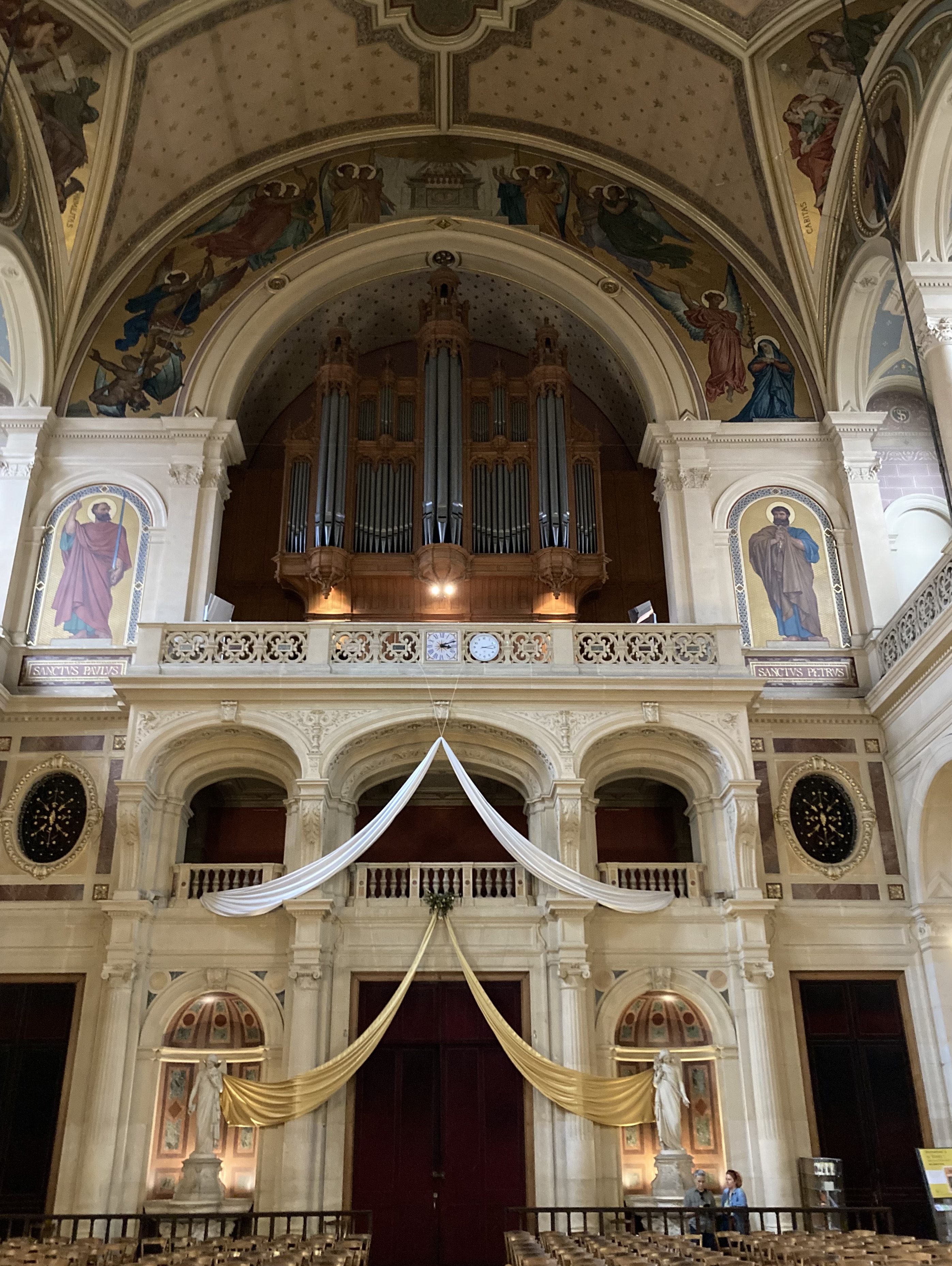
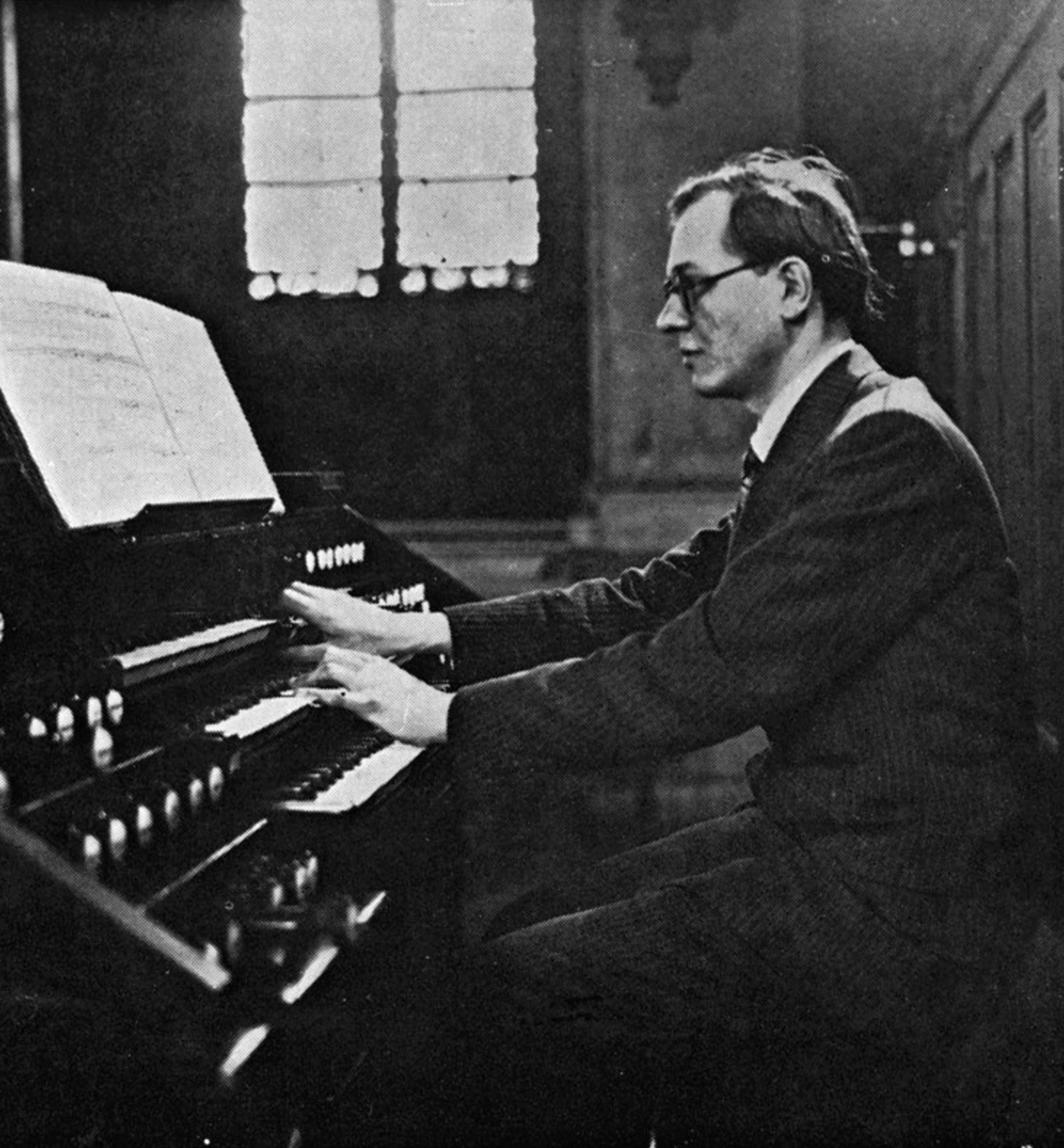
With ‘Le Banquet Céleste’ starts my love for the organ, hearing this organ composition played on a particular organ opened a door and it entered my own musical universe and future. The recording I am referring to is Olivier Messiaen Par Lui Même. Recorded in 1956 Messiaen plays his early organ works on the organ of the ‘Église de la Sainte-Trinité‘
There she is the organ of the ‘Église de la Sainte-Trinité‘
Église de la Sainte-Trinité’
Earliest organ works Messiaen entered the Paris Conservatory in 1919, at the age of eleven. From his childhood Messiaen’s vocation was to be a composer. It was not his faith that led him to take up the organ. His skill as an improviser prompted his harmony teacher to recommend Messiaen to Marcel Dupré [ Organ teacher at the Paris Conservatory ] Messiaen was 18 years old before he first played an organ. Dupré later recalled:
” he sat stupefied in front of my organ keyboards. He had never seen an organ console before. After an hour of explanations and demonstrations, I gave him the Bach C minor Fantasia to learn. He came back a week later and played it to me by heart, perfectly; an astonishing feat! “
His first organ work ‘Le Banquet Céleste‘ dates from his years at the Conservatory.
Barely four years after learning that first piece of Bach he gained his post at the Trinité. In 1930 Messiaen became the chief organist of the Trinité. A position he was to hold for more than 60 years
Messiaen playing the organ of the ‘Église de la Sainte-Trinité‘
After the electric guitar, the mouth organ, the shakuhachi and all kinds of keyboards, the Pedal Steel Guitar came into my life. This beautiful harmonic complex instrument. I never could have expected to spent my time with this beauty from 1973!
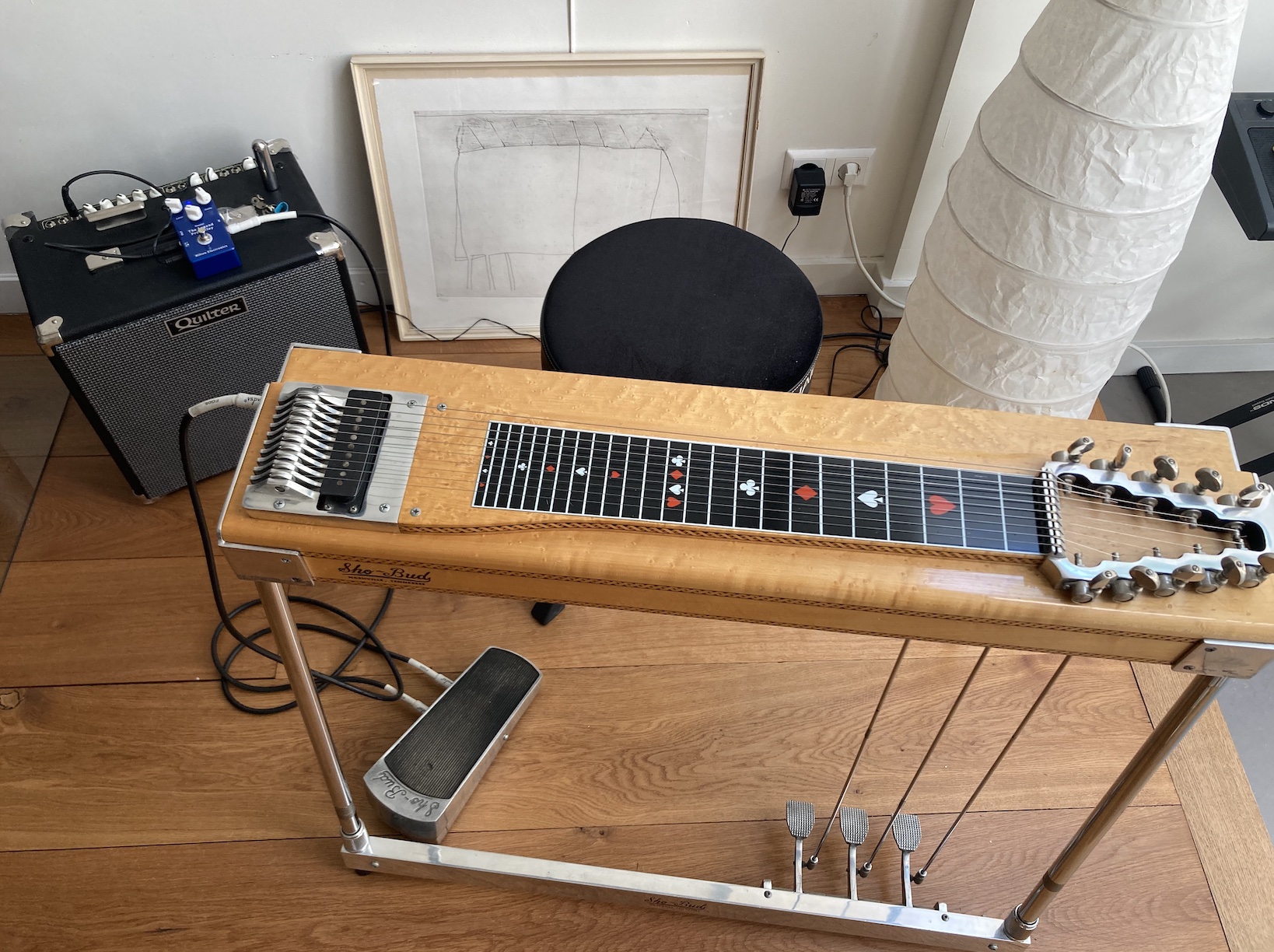
Sho-Bud 6139
Thanks to Buddy Emmons [ the ‘Bud’ in Sho-Bud } I am now sailing on the harmonic sea, day after day.
What is it and what does it sound like?
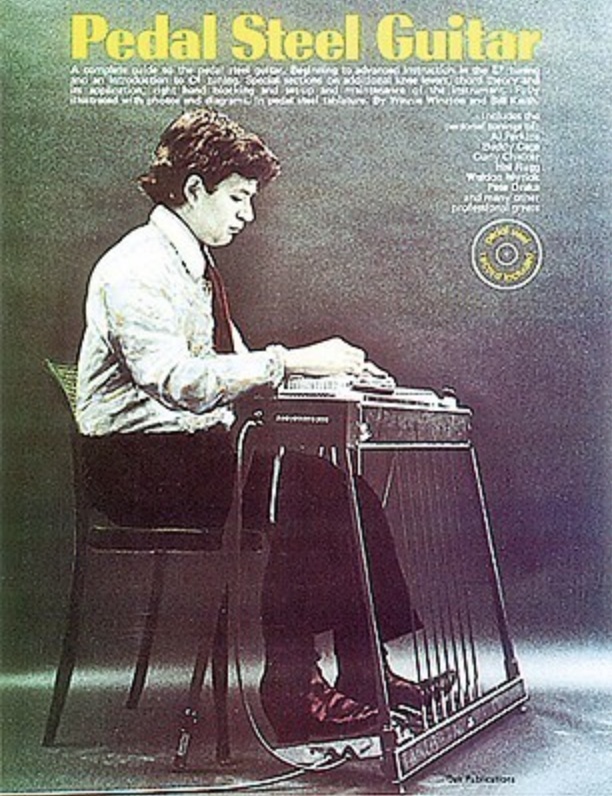
Most people wonder what it is when they see a pedal steel, they have never seen one before! Is it a kind of guitar? Ten strings, no frets, played with a steelbar, foot pedals, knee levers, a volume pedal, finger picks. It’s a one of a kind instrument. True, there is a connection with the lapsteel guitar. Sometimes people start playing a lapsteel and later switch to pedal steel, realising it’s a totally different instrument. So you got to hear it. How does it sound? Well most people relate to the country roots of the pedal steel and it is true, the pedal steel signature sounds can be found on hundreds of hit records from 60’s and 70’s. These records are also a good starting point for the aspiring steel player, you listen to records and you study Winnie Winston’s Pedal Steel Guitar book for some basic technics. There are not that many steel players compared to guitar players and steel teachers are hard to find!
Winnie Winston
Thanks to the internet we do have one great steel player who is teaching an online course. That player is Paul Franklin. Forget most of the YouTube tutorials and go to: https://www.mmmlearn.com [Modern Music Masters].
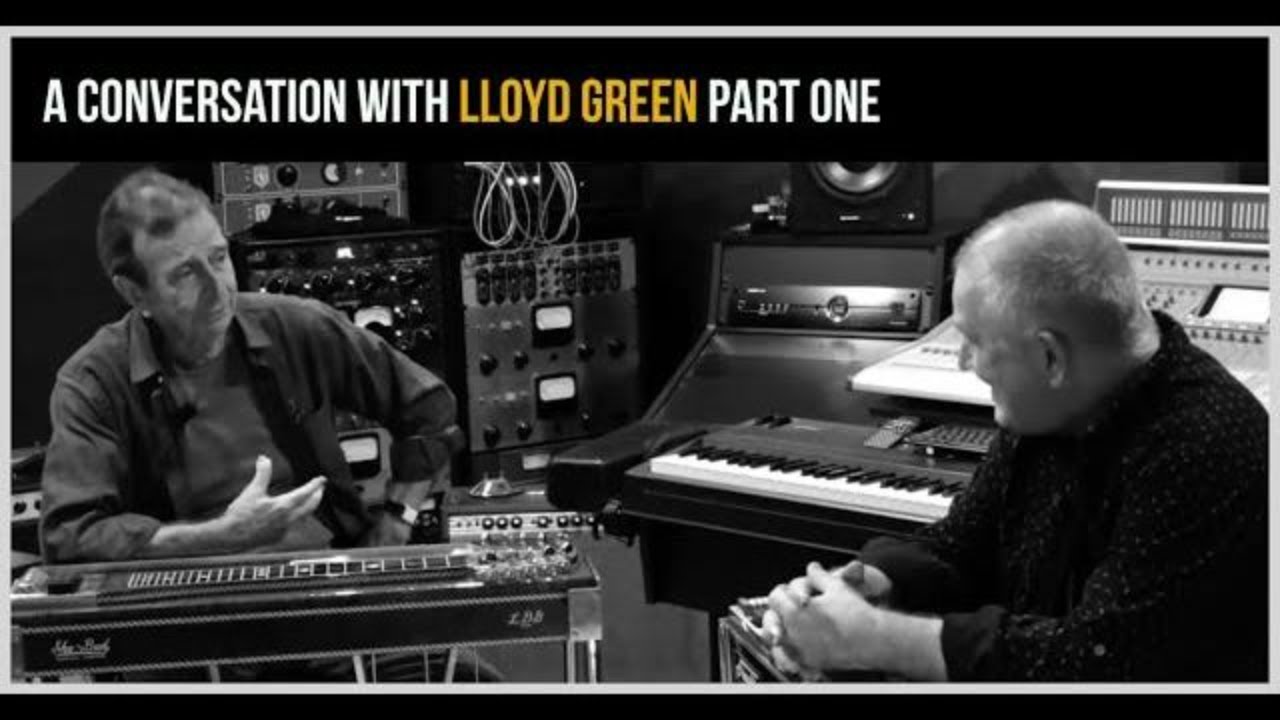
Lloyd Green
While you’re visiting the Modern Music Masters site check out the [free] interview Paul Franklin did with legendary steel player Lloyd Green!
Lloyd Green is one of my heroes, his sound is ‘pure bliss’ David Lynch would say. Lloyd is one of the most heard pedal steel session players ever. Listening to Lloyd gives you a very good impression of the possibilities of the pedal steel guitar. What I personally like so much about Lloyd is his approach to the pedal steel . Back to basics, the less is more approach. You don’t need ten pedals, try finding solutions while using 3 pedals. Work on it! This manual approach leads to a personal sound. Contrary to the steel players that use a lot of pedals, they often sound less personal and more mechanical.
Lloyd Green, Pete Drake, Buddy Emmons, Ralph Mooney, that’s old steel now. Once pioneers and now classic steelers. These ‘steelers’ were part of the first generations that created the golden age of the steelguitar. Starting in the 50’s way into the seventies they played almost exclusively country music. Then in the seventies new steelers started making a name for themselves, they were playing the new countryrock sounds. Blending folk, country, rock, acoustic, electric into a new music. In a way here is where the ‘Americana’ genre was born. Well known steelers like Sneaky Pete Kleinow [ Flying Burrito Brothers ] and Rusty Young [ Poco ] took the pedal steel to other stages and venues. They are like a bridge between the old and new steel.
greg leisz
Greg Leisz
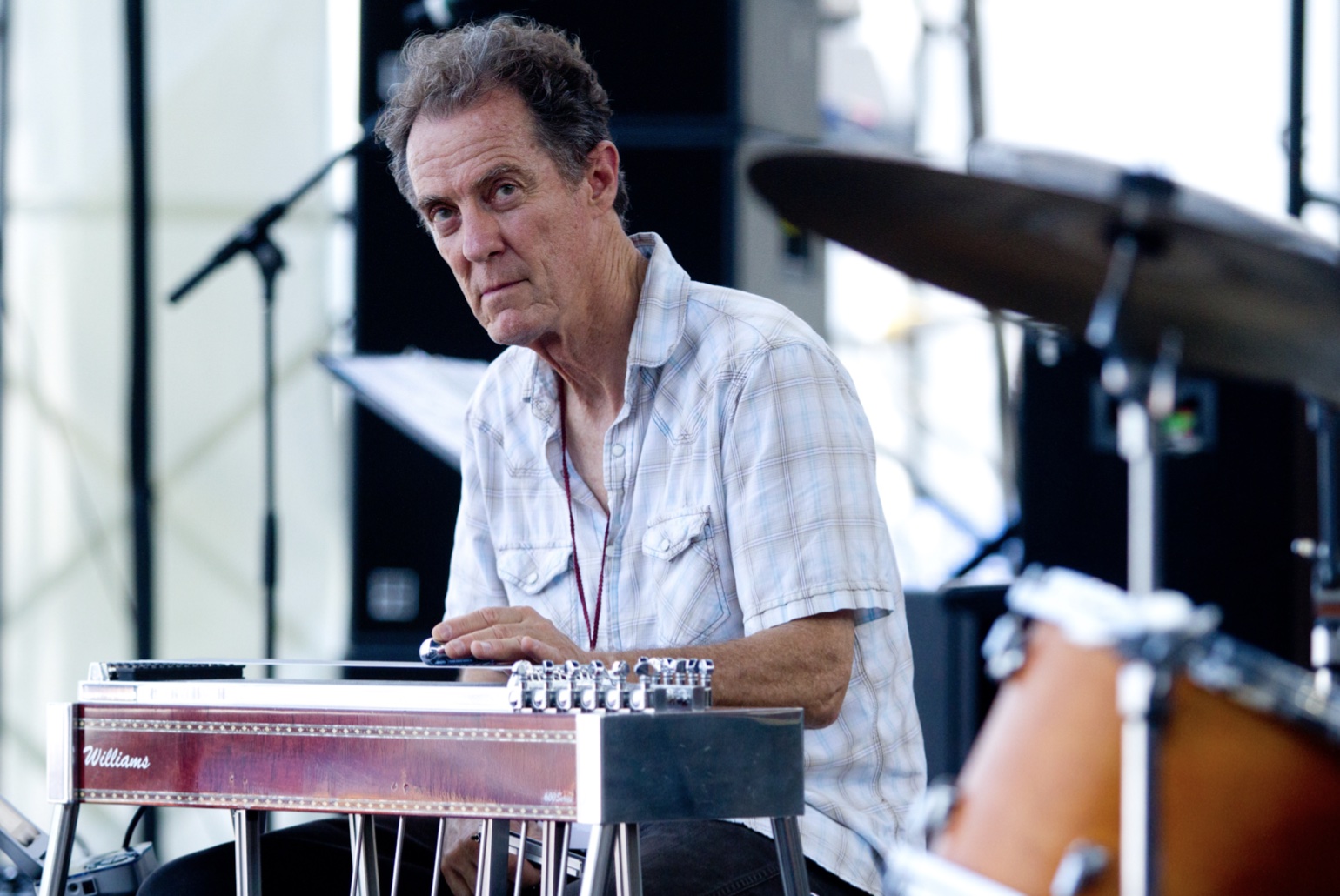
The dominant player today is Greg Leisz, besides pedal steel he also plays lapsteel and guitar. A humble player, you will hear him on records with Bill Frisell, Joni Mitchell, Jackson Brown, and dozens of other great artists. He even got a big hit on YouTube. Hear Greg in an interesting conversation on the Steel Guitar Podcast:
Greg Leisz feels like a modern player but works in the classic E9th style, And Greg also fits into the definition of a session player: be complementary, keeping the spotlight on the singer. But the main thing is, Greg is a tasteful player and he’s got a great sound!
daniel lanois
Daniel Lanois
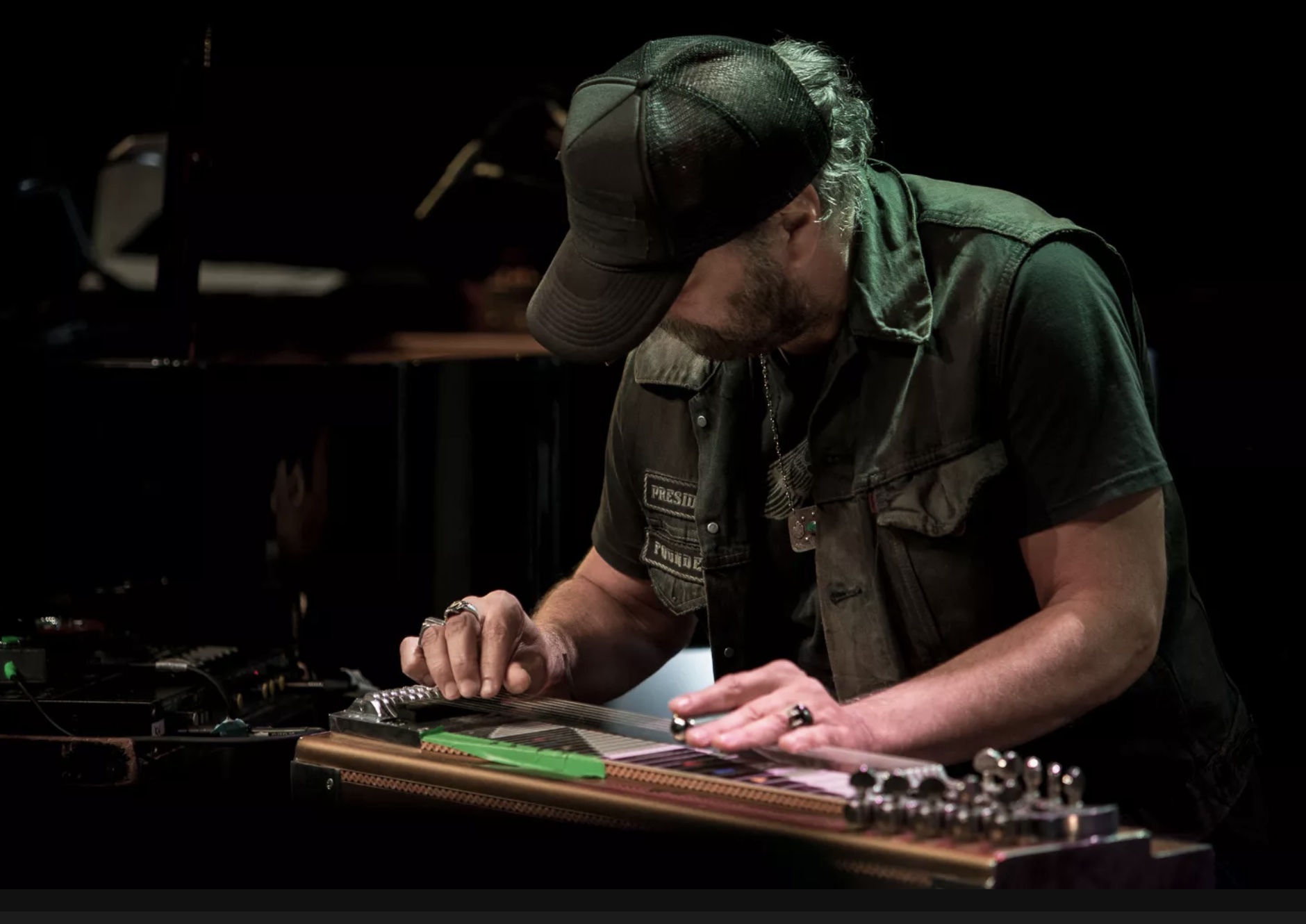
A player who is embarking on a new pedal steel journey is Daniel Lanois. He is perhaps best known as a producer. He has been working with Bob Dylan, U2, Brian Eno, Emmylou Harris, Willie Nelson, Robbie Robertson and countless others. Lanois has a lifetime love for the pedal steel. It starts at a very young age and it took him on this great experimental journey, reinventing the Pedal Steel, turning it into ‘ a church in a suitcase ‘ playing these beautiful songs that are based on the old hymns. [Reminding me of the story of the Bandoneon ‘ the little organ in a suitcase ‘ ]. Lanois uses only 3 pedals, no knee levers. His sound is pure and personal, one instantly recognises his sound. Pure, simple and deeply rooted in the old folksongs and the closely connected church songs.
Here are some examples that will give an impression of Lanois and his steel guitar:
There are two other things I want to share with you. There is an influential player, that did’t fit into this Post but I must mention her. Susan Alcorn, a great improviser on the pedal steel, influenced by jazz and classic music. Sadly, she recently passed away. Please go and visit her website. You won’t be disappointed. Susan Alcorn https://www.susanalcorn.net
Last but not least I want to include a link to the fantastic podcast on the History of Country Music by Tyler Mahan Coe: https://cocaineandrhinestones.com. It’s such a great series, you got to listen to them all! [ except maybe the horrific episode on Spade Cooley, don’t listen to that one because it will turn you away from his music and thereby also away from one of the greats of the steel guitar Joaquin Murphy ]. Anyway there is one episode I recommend to you that is related to this post and that’s the story on the great Ralph Mooney. You can listen to it here: https://open.spotify.com/episode/6HOC5A2TcgbxQvCz9ExqUP?si=6ed25d5b951d49ea